
Sitemap
A list of all the posts and pages found on the site. For you robots out there, there is an XML version available for digesting as well.
Pages
Phuong-Nam Tran, Ph.D.c
An Artificial Intelligence Researcher
Posts
news
Multi-modal Speech Emotion Recognition: Improving Accuracy through Fusion of VGGish and BERT Features with Multi-head Attention
Published:
Paper “Multi-modal Speech Emotion Recognition: Improving Accuracy through Fusion of VGGish and BERT Features with Multi-head Attention” are accepted in The 9th EAI International Conference on Industrial Networks and Intelligent Systems (EAI INISCOM 2023), Ho Chi Minh City, Vietnam, Aug 2-3, 2023.
🗞️🗞️🗞️ 03 papers were accepted at The 14th International Conference on ICT Convergence, Jeju, Korea, Oct 11 -13, 2023.
Published:
- Duong Thanh Tran, Hieu-Nguyen Nguyen-Doan, Trung Thanh Pham, Phuong-Nam Tran, Thuy-Duong Thi Vu, Duc Ngoc Minh Dang, “Vitexco: Exemplar-based Video Colorization using Vision Transformer”, The 14th International Conference on ICT Convergence, Jeju, Korea, Oct 11 -13, 2023
Awarded valedictorian of information technology at FPT University Graduation Ceremony
Published:
Being awarded the valedictorian of Information Technology at FPT University’s Graduation Ceremony fills me with an overwhelming sense of pride and accomplishment. It is a validation of the hard work and dedication I have put into my studies. This recognition serves as a reminder of the potential I possess and motivates me to continue pursuing excellence in my future endeavors.
🗞️🗞️ 02 papers were accepted at The 2024 9th International Conference on Intelligent Information Technology (ICIIT 2024)
Published:
- Nam Van Hai Phan, Tha Le Le, Tuan Phu Phan, Thuy Thu Le, Phuong-Nam Tran, Nhat Truong Pham, and Duc Ngoc Minh Dang, “Deep Learning-Based Automated Cashier System for Bakeries”, The 14th International Conference on ICT Convergence, Jeju, Korea, February 23-25, 2024
🗞️ 01 paper was accepted at The 38th International Conference on Information Networking (ICOIN 2024)
Published:
- Quan Bao Le, Kiet Tuan Trinh, Nguyen Dinh Hung Son, Thuy Thu Le, Phuong-Nam Tran, Cuong Tuan Nguyen, and Duc Ngoc Minh Dang, “MERSA: Multimodal Emotion Recognition with Self-Align Embedding”, The 38th International Conference on Information Networking, January 17-19, 2024
🗞️ 01 paper was accepted at The EAI INISCOM 2024 - 10th EAI International Conference on Industrial Networks and Intelligent Systems
Published:
- Binh Dang Hai, Huu Duc Nguyen, Thanh Nam Vo, Phuong-Nam Tran, Cuong Tuan Nguyen, and Duc Ngoc Minh Dang, “Deep Learning-Based Automated Cashier System for Bakeries”, The EAI INISCOM 2024 - 10th EAI International Conference on Industrial Networks and Intelligent Systems, February 20-21, 2024
🗞️🗞️🗞️🗞️ 04 papers were accepted at The 15th International Conference on ICT Convergence, Jeju, Korea, Oct 16 -18, 2024.
Published:
- Phuong-Nam Tran, Nhat Truong Pham, Nam Van Hai Phan, Duc Tai Phan, Cuong Tuan Nguyen, Duc Ngoc Minh Dang, “Towards Real-Time Vietnamese Traffic Sign Recognition on Embedded Systems”, The 15th International Conference on ICT Convergence, Jeju, Korea, Oct 16 -18, 2024
🗞️ 01 paper was accepted by the Expert Systems With Applications Journal (Q1).
Published:
- Duong Thanh Tran, Nguyen Doan Hieu Nguyen, Trung Thanh Pham, Phuong-Nam Tran, Thuy-Duong Thi Vu, Cuong Tuan Nguyen, Hanh Dang-Ngoc, Duc Ngoc Minh Dang, “SwinTExCo: Exemplar-based video colorization using Swin Transformer”, Expert Systems with Applications, vol. 260, 125437, 2025
🗞️ Paper “MemoCMT Multimodal Emotion Recognition Using Cross-Modal Transformer-Based Feature Fusion” was accepted by the Scientific Reports.
Published:
- Mustaqeem Khan*, Phuong-Nam Tran*, Nhat Truong Pham*, Abdulmotaleb El Saddik, Alice Othmani, “MemoCMT: multimodal emotion recognition using cross-modal transformer-based feature fusion”, Scientific Reports, vol. 15, 5473, 2025 (* Equal contribution)
🗞️ Paper “DeepSeek-Inspired Exploration of RL-Based LLMs and Synergy with Wireless Networks A Survey” was published by the ACM Computing Surveys.
Published:
- Yu Qiao, Phuong-Nam Tran, Ji Su Yoon, Loc X. Nguyen, Eui-Nam Huh, Dusit Niyato, Choong Seon Hong, “DeepSeek-Inspired Exploration of RL-Based LLMs and Synergy with Wireless Networks: A Survey”, ACM Computing Surveys, 2025
🗞️ Paper “A survey on Foundation Models for Personalized Federated Intelligence” was published by the ACM Computing Surveys.
Published:
- Yu Qiao, Huy Q. Le, Avi Deb Raha, Phuong-Nam Tran, Apurba Adhikary, Mengchun Zhang, Loc X. Nguyen, Eui-Nam Huh, Dusit Niyato, Choong Seon Hong, “A Survey on Foundation Models for Personalized Federated Intelligence”, ACM Computing Surveys, 2026
🗞️ Paper “Enhancing battery anomaly detection via trend-reversal spectrograms and multi-modal cross-attention” was published by eTransportation.
Published:
- Phuong-Nam Tran, Trung Thanh Pham, Jae-Jo Lee, Eui-Nam Huh, Choong Seon Hong, “Enhancing battery anomaly detection via trend-reversal spectrograms and multi-modal cross-attention”, eTransportation, vol. 30, 100644, 2026. 📖 Read it for free
portfolio
publications
Multi-modal speech emotion recognition: Improving accuracy through fusion of vggish and bert features with multi-head attention
Published in International Conference on Industrial Networks and Intelligent Systems, 2023
Abstract (excerpt). Recent research has shown that multi-modal learning is a successful method for enhancing classification performance by mixing several forms of input, notably in speech-emotion recognition (SER) tasks. However, the difference between the modalities may affect SER performance. To overcome this problem, a novel approach for multi-modal SER called 3M-SER is proposed in this paper. The 3M-SER leverages multi-head attention to fuse information from multiple feature embeddings, including audio and text features. The 3M-SER approach is based on the SERVER approach but includes an additional fusion module that improves the integration of text and audio features, leading to improved classification performance. To further enhance the correlation between the modalities, a LayerNorm is applied to audio features prior to fusion. Our approach achieved an unweighted accuracy (UA) and weighted accuracy …
Recommended citation: Phuong-Nam Tran, Thuy-Duong Thi Vu, Duc Ngoc Minh Dang, Nhat Truong Pham, Anh-Khoa Tran. (2023). "Multi-modal speech emotion recognition: Improving accuracy through fusion of vggish and bert features with multi-head attention." International Conference on Industrial Networks and Intelligent Systems, 148-158.
Download Paper
Comparative analysis of multi-loss functions for enhanced multi-modal speech emotion recognition
Published in 2023 14th International Conference on Information and Communication Technology Convergence (ICTC), 2023
Abstract (excerpt). In recent years, multi-modal analysis has gained significant prominence across domains such as audio/speech processing, natural language processing, and affective computing, with a particular focus on speech emotion recognition (SER). The integration of data from diverse sources, encompassing text, audio, and images, in conjunction with classifier algorithms has led to the realization of enhanced performance in SER tasks. Traditionally, the cross-entropy loss function has been employed for the classification problem. However, it is challenging to discriminate the feature representations among classes for multi-modal classification tasks. In this study, we focus on the impact of the loss functions on multi-modal SER rather than designing the model architecture. Mainly, we evaluate the performance of multi-modal SER with different loss functions, such as cross-entropy loss, center loss, contrastive-center loss, and …
Recommended citation: Phuong-Nam Tran, Thuy-Duong Thi Vu, Nhat Truong Pham, Hanh Dang-Ngoc, Duc Ngoc Minh Dang. (2023). "Comparative analysis of multi-loss functions for enhanced multi-modal speech emotion recognition." 2023 14th International Conference on Information and Communication Technology Convergence (ICTC), 425-429.
Download Paper
RBBA: ResNet-BERT-Bahdanau attention for image caption generator
Published in 2023 14th International Conference on Information and Communication Technology Convergence (ICTC), 2023
Abstract. In recent years, the topic of image caption generators has gained significant attention. Several successful projects have emerged in this field, showcasing notable advancements. Image caption generators automatically generate descriptive captions for images through the encoder and decoder mechanisms. The encoder leverages computer vision models, while the decoder utilizes natural language processing models. In this study, we aim to assess a comprehensive set of seven distinct methodologies, including six existing methods from prior research and one newly proposed. These methods are trained and evaluated with bilingual evaluation (BLEU) on the Flickr8K dataset. In our experiments, the proposed ResNet50 – BERT – Bahdanau Attention model outperforms the other models in terms of the BLEU-1 score of 0.532143 and BLEU-4 score of 0.126316.
Recommended citation: Duc-Hieu Hoang, Anh-Khoa Tran, Duc Ngoc Minh Dang, Phuong-Nam Tran, Hanh Dang-Ngoc, Cuong Tuan Nguyen. (2023). "RBBA: ResNet-BERT-Bahdanau attention for image caption generator." 2023 14th International Conference on Information and Communication Technology Convergence (ICTC), 430-435.
Download Paper
Vitexco: Exemplar-based video colorization using vision transformer
Published in 2023 14th International Conference on Information and Communication Technology Convergence (ICTC), 2023
Abstract. In the field of image and video colorization, the existing research employs a CNN to extract information from each video frame. However, due to the local nature of a kernel, it is challenging for CNN to capture the relationships between each pixel and others in an image, leading to inaccurate colorization. To solve this issue, we introduce an end-to-end network called Vitexco for colorizing videos. Vitexco utilizes the power of the Vision Transformer (ViT) to capture the relationships among all pixels in a frame with each other, providing a more effective method for colorizing video frames. We evaluate our approach on DAVIS datasets and demonstrate that it outperforms the state-of-the-art methods regarding color accuracy and visual quality. Our findings suggest that using a ViT can significantly enhance the performance of video colorization.
Recommended citation: Duong Thanh Tran, Nguyen Doan Hieu Nguyen, Trung Thanh Pham, Phuong-Nam Tran, Thuy-Duong Thi Vu, Duc Ngoc Minh Dang. (2023). "Vitexco: Exemplar-based video colorization using vision transformer." 2023 14th International Conference on Information and Communication Technology Convergence (ICTC), 59-64.
Download Paper
MERSA: Multimodal Emotion Recognition with Self-Align Embedding
Published in 2024 International Conference on Information Networking (ICOIN), 2024
Abstract (excerpt). Emotions are an integral part of human communication and interaction, significantly shaping our social connections, decision-making, and overall well-being. Understanding and analyzing emotions have become essential in various fields, including psychology, human-computer interaction, marketing, and healthcare. The previous approach has indeed made significant strides in improving the accuracy of predicting emotions within speech. However, the current model’s performance still falls short when it comes to real-life applications. This limitation arises due to several factors such as lack of context, ambiguity in speech and meaning, and other contributing elements. To reduce the ambiguity of emotions within speech, this paper seeks to leverage multiple data modalities, specifically textual and acoustic information. To analyze these modalities, we propose a novel approach called MERSA which utilizes the self …
Recommended citation: Quan Bao Le, Kiet Tuan Trinh, Nguyen Dinh Hung Son, Phuong-Nam Tran, Cuong Tuan Nguyen, Duc Ngoc Minh Dang. (2024). "MERSA: Multimodal Emotion Recognition with Self-Align Embedding." 2024 International Conference on Information Networking (ICOIN), 500-505.
Download Paper
Performance comparison in traffic sign recognition using deep learning
Published in International Conference on Industrial Networks and Intelligent Systems, 2024
Abstract (excerpt). In recent years, along with the increase in private cars, traffic signs have increased in quantity, demanding greater attentiveness from drivers. Many studies have been conducted on Traffic Sign Recognition (TSR) to enhance road safety and driver assistance systems by enabling vehicles to autonomously detect and interpret traffic signs, providing crucial information to drivers in real-time. This paper examines various traffic sign detection and classification models, which give practitioners and researchers valuable insights into selecting optimal solutions tailored to the needs of real-world applications. Notably, the investigation highlights YOLOv8 as a leading detection model, displaying exceptional results with an mAP of 99.4%. YOLOv8 provides various model sizes allowing for adaptation to specific real-time processing scenarios. On the other hand, the LeNet model is a standout performer in the classification …
Recommended citation: Binh Dang Hai, Huu Duc Nguyen, Thanh Nam Vo, Phuong-Nam Tran, Cuong Tuan Nguyen, Duc Ngoc Minh Dang. (2024). "Performance comparison in traffic sign recognition using deep learning." International Conference on Industrial Networks and Intelligent Systems, 122-138.
Download Paper
Deep learning-based automated cashier system for bakeries
Published in Proceedings of the 2024 9th International Conference on Intelligent Information Technology, 2024
Abstract (excerpt). The application of image recognition in the bakery business has paved the way for automatic payment systems, a significant advancement in the field of computer vision. This article delves into an exploration of advanced image recognition models to meticulously assess their effectiveness, speed, and suitability for seamless integration into specialized automatic payment systems tailored for bakeries. Specifically, YOLOX, YOLOv8, Faster R-CNN, and RetinaNet, each with different versions and backbones, are considered for evaluation based on their speed and performance. Notably, this study introduces a streamlined process for rapidly creating custom datasets for object detection research and evaluates models across these datasets. The insights and analyses derived from this study provide valuable perspectives for optimizing processes and enhancing the overall performance of automatic payment systems …
Recommended citation: Nam Van Hai Phan, Tha Thanh Le, Tuan Phu Phan, Thu Thuy Le, Phuong-Nam Tran, Nhat Truong Pham, Duc Ngoc Minh Dang. (2024). "Deep learning-based automated cashier system for bakeries." Proceedings of the 2024 9th International Conference on Intelligent Information Technology, 94-100.
Download Paper
Innovative multi-modal control for surveillance spider robot: An integration of voice and hand gesture recognition
Published in Proceedings of the 2024 9th International Conference on Intelligent Information Technology, 2024
Abstract (excerpt). The spider robot is designed to take on challenging tasks in hazardous conditions. It can move across challenging terrain like walls and rough surfaces, and effectively find lost objects. In this paper, an innovative multi-modal control approach was developed for the Surveillance Spider Robot (SSR) application, integrating voice recognition and hand gesture recognition as control commands. SSR, a six-legged robot, was designed using a Raspberry Pi 4B embedded device, Arduino Uno kit, RC Servo motors (MG996R), 18650 batteries, mini USB microphone (MI-350), Pi camera V1 (OV5647) and PWM generator (PCA9685). The robot can be controlled through voice or hand gesture recognition captured via camera and microphone. SSR is capable of performing ten specific tasks based on these control commands, including forward movement, backward movement, left turns, right turns, complete turns, movements …
Recommended citation: Dang Khoa Phan, Phuong-Nam Tran, Nhat Truong Pham, Tra Huong Thi Le, Duc Ngoc Minh Dang. (2024). "Innovative multi-modal control for surveillance spider robot: An integration of voice and hand gesture recognition." Proceedings of the 2024 9th International Conference on Intelligent Information Technology, 141-148.
Download Paper
Vietnamese traffic sign recognition using deep learning
Published in Proceedings of the 2024 9th International Conference on Intelligent Information Technology, 2024
Abstract. Recognizing the importance of road safety, traffic signs are designed in a variety of shapes, colors, and images to guide and alert drivers. Overlooking these signs, particularly the crucial ones, due to various factors, can lead to legal violations or even catastrophic accidents, impacting multiple aspects of our lives. Consequently, the use of computer systems for traffic sign recognition is urgently needed for the safety of commuters. This not only plays a pivotal role in improving our continually evolving technology but also has substantial value in academic research. Due to the complexity of terrain and the influence of weather on outcomes, Traffic Sign Recognition (TSR) remains a high-priority challenge. This article focuses on the creation of a Vietnamese traffic sign dataset comprising 46 classes. Subsequently, we implement various detection and recognition models using this dataset to assess their performance.
Recommended citation: Dinh Thuan Nguyen, Minh Khanh Phan, Phuong-Nam Tran, Duc Ngoc Minh Dang. (2024). "Vietnamese traffic sign recognition using deep learning." Proceedings of the 2024 9th International Conference on Intelligent Information Technology, 30-35.
Download Paper
Enhancing speech emotion recognition through knowledge distillation
Published in 2024 15th International Conference on Information and Communication Technology Convergence (ICTC), 2024
Abstract (excerpt). The importance of Speech Emotion Recognition (SER) is growing across diverse applications, which has resulted in the development of multiple methodologies and models to improve SER performance. Nevertheless, some modern SER models require significant processing resources and exhibit poor performance, making them unsuitable for real-time applications. To address this, we propose a novel approach that leverages Knowledge Distillation (KD) to create lightweight student models derived from the 3M-SER architecture. Our method focuses on compressing the text embedding component by replacing BERT BASE with smaller variants while maintaining VGGish for audio embedding. Experiments conducted on the IEMOCAP dataset demonstrate that our student model, which reduces model size by up to 44.9%, achieves performance remarkably close to that of the teacher model while improving inference …
Recommended citation: Trung Minh Nguyen, Phuong-Nam Tran, Duc Ngoc Minh Dang. (2024). "Enhancing speech emotion recognition through knowledge distillation." 2024 15th International Conference on Information and Communication Technology Convergence (ICTC), 197-202.
Download Paper
Federated Learning with U-Net for Brain Tumor Segmentation: Impact of Client Numbers and Data Distribution
Published in 2024 15th International Conference on Information and Communication Technology Convergence (ICTC), 2024
Abstract (excerpt). Brain tumor segmentation plays a crucial role in diagnosis and treatment planning. However, sharing patient data for training deep learning models raises privacy concerns. This paper proposes a federated learning (FL) approach utilizing a U-Net architecture for the segmentation of brain tumors. We evaluate the performance of federated U-Net models under various data distribution and varying numbers of clients. Specifically, we compare the effectiveness of two FL methods: Federated Averaging (FedAvg) and Federated Stochastic Gradient Descent (FedSGD). Through experiments conducted on the BraTS dataset, we observe that as the number of clients increases, the overall performance of the models tends to decrease. Moreover, we find that skewed data distribution often outperforms equal data division. Additionally, we consistently observe that FedAvg yields superior results compared to FedSGD. Our …
Recommended citation: Thu Thuy Le, Nhat Truong Pham, Phuong-Nam Tran, Duc Ngoc Minh Dang. (2024). "Federated Learning with U-Net for Brain Tumor Segmentation: Impact of Client Numbers and Data Distribution." 2024 15th International Conference on Information and Communication Technology Convergence (ICTC), 2048-2053.
Download Paper
Towards real-time vietnamese traffic sign recognition on embedded systems
Published in 2024 15th International Conference on Information and Communication Technology Convergence (ICTC), 2024
Abstract (excerpt). AI development has brought many significant changes in various aspects of our daily lives in recent years. Integrating AI technology into various applications has revolutionized multiple domains, and one particularly vital area is traffic sign recognition, which significantly enhances driver safety. This paper presents an approach to traffic sign recognition specifically designed for the Jetson Nano 2GB device. By utilizing the YOLOv8 Nano model, the proposed approach achieves a remarkable frame rate of up to 32 frames per second (FPS). To optimize inference speed on Jetson with limited memory, the approach incorporates TensorRT and quantization techniques. In addition, this paper introduces a dataset called the Vietnamese Traffic Sign Detection Database 100 (VTSDB100). This dataset is an extension of the VTSDB46 dataset and encompasses a comprehensive collection of 100 different classes of traffic signs …
Recommended citation: Phuong-Nam Tran, Nhat Truong Pham, Nam Van Hai Phan, Duc Tai Phane, Cuong Tuan Nguyen, Duc Ngoc Minh Dang. (2024). "Towards real-time vietnamese traffic sign recognition on embedded systems." 2024 15th International Conference on Information and Communication Technology Convergence (ICTC), 1-6.
Download Paper
Enhancing Federated Learning Performance for Medical Image Segmentation via Representation Learning
Published in Proceedings of the Korean Institute of Information Scientists and Engineers (KIISE) Conference, 2024
Abstract (excerpt). Privacy in the medical field is a paramount concern, especially when integrating artificial intelligence models into healthcare, as these models require substantial data to attain optimal accuracy. Indeed, federated learning emerges as a promising solution to train high-accuracy artificial intelligence models while safeguarding the privacy of patient data. However, given the inherent variability in patient demographics, equipment, and procedures, the original federated learning algorithm may not yield optimal performance when learning with data from many hospitals, referred to as an imbalance and non-iid (non-independent and identically distributed) data problem. In this paper, we propose FedRep, a method for addressing non-iid data in the medical field through representation learning. FedFeat is an experiment on the skin image dataset used for segmentation tasks. The experiments depict that our proposed …
Recommended citation: Phuong-Nam Tran, Hyeonsu Kim, Choong Seon Hong. (2024). "Enhancing Federated Learning Performance for Medical Image Segmentation via Representation Learning." Proceedings of the Korean Institute of Information Scientists and Engineers (KIISE) Conference, 794-796.
Download Paper
Improving Face Attendance Checking System with Ensemble Learning
Published in 2024 RIVF International Conference on Computing and Communication Technologies (RIVF), 2024
Abstract (excerpt). An accurate and efficient attendance system is essential in modern industrial and educational settings. However, traditional methods often suffer from inaccuracies, inefficiencies, and vulnerability to fraud. Recent work usually utilizes a single model for employing the face recognition system, leading to many failures due to the model’s low performance. This paper presents an advanced face attendance system using ensemble learning to overcome the limitations of single-model approaches. The proposed system achieves near-perfect accuracy under optimal conditions by integrating the strengths of multiple deep learning models, including ResNet, VGGFace, and FaceNet. The ensemble approach boosts the robustness and reliability of the attendance system, making it a promising solution for real-world deployment in educational and workplace environments. The key contribution of this work is the development of …
Recommended citation: Duc Tai Phan, Phuong-Nam Tran, Duc Ngoc Minh Dang. (2024). "Improving Face Attendance Checking System with Ensemble Learning." 2024 RIVF International Conference on Computing and Communication Technologies (RIVF), 250-254.
Download Paper
QTSeg: A Query Token-Based Dual-Mix Attention Framework with Multi-Level Feature Distribution for Medical Image Segmentation
Published in arXiv preprint arXiv:2412.17241, 2024
Abstract (excerpt). Medical image segmentation plays a crucial role in assisting healthcare professionals with accurate diagnoses and enabling automated diagnostic processes. Traditional convolutional neural networks (CNNs) often struggle with capturing long-range dependencies, while transformer-based architectures, despite their effectiveness, come with increased computational complexity. Recent efforts have focused on combining CNNs and transformers to balance performance and efficiency, but existing approaches still face challenges in achieving high segmentation accuracy while maintaining low computational costs. Furthermore, many methods underutilize the CNN encoder’s capability to capture local spatial information, concentrating primarily on mitigating long-range dependency issues. To address these limitations, we propose QTSeg, a novel architecture for medical image segmentation that effectively integrates local and global information. QTSeg features a dual-mix attention decoder designed to enhance segmentation performance through: (1) a cross-attention mechanism for improved feature alignment, (2) a spatial attention module to capture long-range dependencies, and (3) a channel attention block to learn inter-channel relationships. Additionally, we introduce a multi-level feature distribution module, which adaptively balances feature propagation between the encoder and decoder, further boosting performance. Extensive experiments on five publicly available datasets covering diverse segmentation tasks, including lesion, polyp, breast cancer, cell, and retinal vessel segmentation, demonstrate that QTSeg outperforms state-of-the-art …
Recommended citation: Phuong-Nam Tran, Nhat Truong Pham, Duc Ngoc Minh Dang, Eui-Nam Huh, Choong Seon Hong. (2024). "QTSeg: A Query Token-Based Dual-Mix Attention Framework with Multi-Level Feature Distribution for Medical Image Segmentation." arXiv preprint arXiv:2412.17241.
Download Paper
A Distribution-Aware Robust Federated Learning Framework for Mobile Edge Networks
Published in 2025 International Conference on Information Networking (ICOIN), 2025
Abstract (excerpt). Federated learning (FL) is a promising technology for achieving edge intelligence in mobile edge networks while preserving the privacy of local clients. However, a significant challenge in FL is the non-IID data across clients, which can lead to inconsistent updates between local and global models, ultimately hindering convergence. Furthermore, recent research has shown that FL models are susceptible to adversarial attacks, especially in non-IID scenarios, which can significantly impair their performance. This vulnerability poses further challenges to achieving robust and generalizable edge intelligence. In this paper, we first identify that the model’s predictions for classes with fewer samples are less confident compared to those with more samples, even in federated adversarial environments. Second, recognizing that adversarial training (AT) is an effective defense mechanism, we propose a distribution-aware …
Recommended citation: Yu Qiao, Phuong-Nam Tran, Choong Seon Hong. (2025). "A Distribution-Aware Robust Federated Learning Framework for Mobile Edge Networks." 2025 International Conference on Information Networking (ICOIN), 256-261.
Download Paper
Additive angular margin loss for federated learning in image classification
Published in 2025 International Conference on Information Networking (ICOIN), 2025
Abstract (excerpt). Federated learning (FL) is a method that leverages data from multiple sources to enhance deep learning models while safeguarding data privacy. This approach finds applications in diverse domains such as healthcare, entertainment, and user experience enhancement. Despite its effectiveness, FL’s performance is still low compared to centralized training methods, necessitating further improvements. Particularly in critical areas such as medicine, where accurate model predictions are crucial, conventional FL algorithms fall short compared to centralized training. This study introduces a new training approach to further improve the vanilla FL algorithm. Our proposed method takes advantage of feature-based adjustments using cosine angles by incorporating an angular margin loss function alongside the cross-entropy loss. It notably enhances the accuracy of the aggregated models on datasets such as MNIST …
Recommended citation: Phuong-Nam Tran, Duc Ngoc Minh Dang, Eui-Nam Huh, Choong Seon Hong. (2025). "Additive angular margin loss for federated learning in image classification." 2025 International Conference on Information Networking (ICOIN), 274-279.
Download Paper
SwinTExCo: Exemplar-based video colorization using Swin Transformer
Published in Expert Systems with Applications, 2025
Abstract (excerpt). Video colorization represents a compelling domain within the field of Computer Vision. The traditional approach in this field relies on Convolutional Neural Networks (CNNs) to extract features from each video frame and employs a recurrent network to learn information between video frames. While demonstrating considerable success in colorization, most traditional CNNs suffer from a limited receptive field size, capturing local information within a fixed-sized window. Consequently, they struggle to directly grasp long-range dependencies or pixel relationships that span large image or video frame areas. To address this limitation, recent advancements in the field have leveraged Vision Transformer (ViT) and their variants to enhance performance. This article introduces Swin Transformer Exemplar-based Video Colorization (SwinTExCo), an end-to-end model for the video colorization process that incorporates the …
Recommended citation: Duong Thanh Tran, Nguyen Doan Hieu Nguyen, Trung Thanh Pham, Phuong-Nam Tran, Thuy-Duong Thi Vu, Cuong Tuan Nguyen, Hanh Dang-Ngoc, Duc Ngoc Minh Dang. (2025). "SwinTExCo: Exemplar-based video colorization using Swin Transformer." Expert Systems with Applications, 260, 125437.
Download Paper
Enhancing Skin Lesion Classification Performance via Hybrid Quantum-Classical Learning
Published in Proceedings of the Korean Institute of Information Scientists and Engineers (KIISE) Conference, 2025
Abstract (excerpt). Accurate skin disease classification from medical images is challenging due to data complexity. This paper proposes a novel hybrid classical-quantum framework to improve the performance of classical deep learning approaches on the skin lesion classification problem. This research conducts experiments on the HAM10000 dataset, a dataset that comprises skin lesion images for the classification task. To leverage the quantum advancements but still have limitations of the noisy intermediate-scale quantum era, we design a variational quantum circuit (VQC) architecture for enhancing the performance of classical features on HAM10000 dataset. We also compared the performance of some well-known pretrained deep learning architectures to demonstrate the advancement of our proposed hybrid classical-quantum approach. By using this approach, we enhanced the accuracy of a classical deep learning model from …
Recommended citation: Trung Thanh Pham, Phuong-Nam Tran, Choong Seon Hong. (2025). "Enhancing Skin Lesion Classification Performance via Hybrid Quantum-Classical Learning." Proceedings of the Korean Institute of Information Scientists and Engineers (KIISE) Conference, 1611-1613.
Download Paper
Overcoming Non-IID Challenges in Federated Learning with Feature Learning
Published in Proceedings of the Korean Institute of Information Scientists and Engineers (KIISE) Conference, 2025
Abstract. Federated Learning (FL) is a pivotal framework for enhancing AI models in healthcare by preserving data privacy during training. However, non-iid (not independent and identically distributed), due to diverse patient demographics and medical diagnostic tools, often hinders model convergence. To address this issue, we propose a novel approach that integrates an angular loss function to align feature representations across clients in angular space. Experimental results demonstrate that this method enhances the overall performance of FL strategies while improving the separation of feature representation of the global model. These findings underscore the potential for privacy-preserving AI applications in medicine.
Recommended citation: Phuong-Nam Tran, Seong-Bae Park, Choong Seon Hong. (2025). "Overcoming Non-IID Challenges in Federated Learning with Feature Learning." Proceedings of the Korean Institute of Information Scientists and Engineers (KIISE) Conference, 1578-1580.
Download Paper
Mask CoMER: Enhancing Handwritten Mathematical Expression Recognition with Masked Language Pretraining and Regularization
Published in International Conference on Document Analysis and Recognition, 2025
Abstract (excerpt). Handwritten Mathematical Expression Recognition (HMER) is crucial for enhancing human-machine interaction in domains such as digitized education and automated document processing. While existing transformer-based methods employ coverage mechanisms to capture context, they often still lose critical cues that a human could quickly correct. To address this, we propose Mask CoMER, a two-stage training approach that combines a novel Masked Language Model Pretraining objective with stochastic depth regularization. This method enhances contextual understanding and mitigates information loss, leading to improved recognition accuracy. Experiments on the CROHME 2014, 2016, and 2019 datasets demonstrate that Mask CoMER achieves state-of-the-art ExpRates of 64.56%, 63.03%, and 65.22%, respectively. These results outperform the baseline CoMER by up to 5% and surpass the previous SOTA by …
Recommended citation: Nam Van Hai Phan, Khoa Minh Nguyen, Trung Thanh Nguyen, Trung Thanh Pham, Phuong-Nam Tran, Duc Ngoc Minh Dang. (2025). "Mask CoMER: Enhancing Handwritten Mathematical Expression Recognition with Masked Language Pretraining and Regularization." International Conference on Document Analysis and Recognition, 375-390.
Download Paper
Adaptive Semantic Communication for Multi-User Systems with Non-Uniform Deep Architectures
Published in 2025 25th Asia-Pacific Network Operations and Management Symposium (APNOMS), 2025
Abstract (excerpt). Semantic communication is going to be the backbone of the next wireless generation communication, thanks to its advantages in reducing the communication volume, bandwidth efficiency, and robustness against channel noise. These impressive capabilities are enabled by adopting the advancements of deep learning (DL) in the design framework of the joint sourcechannel coding (JSCC) for the semantic communication system. However, in multi-user semantic communication scenarios, it is often infeasible to equip all users with identical DL architectures due to the heterogeneous computing capabilities across devices. Therefore, we consider a multi-user semantic communication scenario, where the user device is deployed with a different DL model to reflect the heterogeneity in computing capacity. Then, we proposed a training framework to enhance the communication performance and prevent the catastrophic …
Recommended citation: Loc X Nguyen, Phuong-Nam Tran, Trung Thanh Pham, Eui-Nam Huh, Choong Seon Hong. (2025). "Adaptive Semantic Communication for Multi-User Systems with Non-Uniform Deep Architectures." 2025 25th Asia-Pacific Network Operations and Management Symposium (APNOMS), 1-6.
Download Paper
MemoCMT: multimodal emotion recognition using cross-modal transformer-based feature fusion
Published in Scientific Reports, 2025

Recommended citation: Mustaqeem Khan*, Phuong-Nam Tran*, Nhat Truong Pham*, Abdulmotaleb El Saddik, Alice Othmani. (2025). "MemoCMT: multimodal emotion recognition using cross-modal transformer-based feature fusion." Scientific Reports, 15, 5473. (* Equal contribution)
Download Paper
DeepSeek-Inspired Exploration of RL-Based LLMs and Synergy with Wireless Networks: A Survey
Published in ACM Computing Surveys, 2025
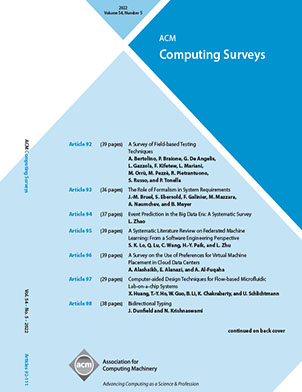
Recommended citation: Yu Qiao, Phuong-Nam Tran, Ji Yoon, Loc Nguyen, Eui-Nam Huh, Dusit (Tao) Niyato, Choong Seon Hong. (2025). "DeepSeek-Inspired Exploration of RL-Based LLMs and Synergy with Wireless Networks: A Survey." ACM Computing Surveys.
Download Paper
Leveraging Large Language Models for the Bin Packing Problem
Published in Proceedings of the Korean Institute of Information Scientists and Engineers (KIISE) Conference, 2025
Abstract. Despite being introduced in the last century, the bin packing problem (BPP) remains one of the most studied topics in optimization due to its wide applicability to real-world problems. The most essential goal of the problem is to enable more objects to be packed into bins, while using the fewest bins possible. Computationally, the problem is NP-hard, meaning there is no known polynomial-time algorithm to find the optimal solution for large input sizes. Despite numerous heuristic and meta-heuristic algorithms proposed for the BPP, their performance remains below expectations. Therefore, in this paper, we leverage a pre-trained large language model to find the best possible solution for the BPP. Finally, we provide experiments on a randomly generated dataset to illustrate the performance gain compared with the existing heuristic algorithms.
Recommended citation: Dat K Nguyen, Phuong-Nam Tran, Trung Thanh Pham, Loc X Nguyen, Choong Seon Hong. (2025). "Leveraging Large Language Models for the Bin Packing Problem." Proceedings of the Korean Institute of Information Scientists and Engineers (KIISE) Conference, 399-401.
Download Paper
Federated Semi-Supervised FixMatch: Enhancing CutMix for Medical Image Segmentation
Published in 2025 IEEE International Conference on Big Data (BigData), 2025
Abstract (excerpt). Previous studies on federated learning (FL) often assume that each client has access to fully labeled data. In reality, however, most hospitals and clinical facilities lack sufficient labeled data, as annotation is costly and requires highly skilled experts. The key challenge, therefore, is how to effectively train FL models when only a small portion of data at each client is labeled. Federated semi-supervised learning (FSSL) has emerged as a promising solution. From the perspective of big data, this challenge is further intensified by the large scale, heterogeneity, and non-IID nature of data distributions. These factors significantly affect training efficiency, making it crucial to fully leverage diverse unlabeled datasets while ensuring privacy and minimizing communication costs for large-scale FL deployment. In this study, we apply data augmentation in FSSL to make better use of unlabeled data together with the limited amount …
Recommended citation: Thu Thuy Le, Nhut Minh Nguyen, Nhat Truong Pham, Phuong-Nam Tran, Nguyen Doan Hieu Nguyen, Phuong Luu Vo, Balachandran Manavalan, Duc Ngoc Minh Dang. (2025). "Federated Semi-Supervised FixMatch: Enhancing CutMix for Medical Image Segmentation." 2025 IEEE International Conference on Big Data (BigData), 3462-3471.
Download Paper
Multimodal fusion in speech emotion recognition: A comprehensive review of methods and technologies
Published in Engineering Applications of Artificial Intelligence, 2026
Abstract (excerpt). Speech emotion recognition (SER) plays a crucial role in human–computer interaction, enhancing numerous applications such as virtual assistants, healthcare monitoring, and customer support by identifying and interpreting emotions conveyed through spoken language. While unimodal SER systems demonstrate notable simplicity and computational efficiency, excelling in extracting critical features like vocal prosody and linguistic content, there is a pressing need to improve their performance in challenging conditions, such as noisy environments and the handling of ambiguous expressions or incomplete information. These challenges underscore the necessity of transitioning to multimodal approaches, which integrate complementary data sources to achieve more robust and accurate emotion detection. With advancements in artificial intelligence, especially in neural networks and deep learning, many studies have …
Recommended citation: Nhut Minh Nguyen, Thanh Trung Nguyen, Phuong-Nam Tran, Chee Peng Lim, Nhat Truong Pham, Duc Ngoc Minh Dang. (2026). "Multimodal fusion in speech emotion recognition: A comprehensive review of methods and technologies." Engineering Applications of Artificial Intelligence, 163, 112624.
Download Paper
Hybrid Variational Quantum Circuit for Satellite Image Classification
Published in 2026 40th International Conference on Information Networking (ICOIN), 2026
Abstract (excerpt). The requirement for classifying terrain images is increasing with a fast pace due to various important applications such as agriculture, urban planning, and environmental monitoring. Therefore, a variety of pre-trained classification models such as VGG, ResNet, MobileNet, and also Swin-Transformer V2, have been adopted to enhance the accuracy for classifying the satellite images. However, these improvements often come at the cost of increased computational resources, which can be infeasible for edge devices with limited re-training capabilities. In this paper, we integrate the variational quantum circuits into the deep learning model for image classification, which offers superior classification performance with a reduced number of retraining parameters. By utilizing the parameter shift rule, we can compute the gradients of the variational quantum circuit’s parameters without relying on traditional backpropagation …
Recommended citation: Trung Thanh Pham, Loc X Nguyen, Phuong-Nam Tran, Eui-Nam Huh, Choong Seon Hong. (2026). "Hybrid Variational Quantum Circuit for Satellite Image Classification." 2026 40th International Conference on Information Networking (ICOIN), 776-781.
Download Paper
Enhancing multimodal emotion recognition with dynamic fuzzy membership and attention fusion
Published in Engineering Applications of Artificial Intelligence, 2026
Abstract (excerpt). Multimodal learning has been shown to enhance classification outcomes in speech emotion recognition (SER). Despite this advantage, multimodal approaches in SER often face key challenges, including limited robustness to uncertainty, difficulty generalizing across diverse emotional contexts, and inefficiencies in integrating heterogeneous modalities. To overcome these constraints, we propose a multimodal emotion recognition architecture, named FleSER, which leverages dynamic fuzzy membership and attention-based fusion. Unlike most previous SER studies that apply fuzzy logic at the decision level, FleSER introduces a feature-level, rule-based dynamic fuzzy membership mechanism that adaptively refines modality representations prior to fusion. The FleSER architecture leverages audio and textual modalities, employing self-modality and cross-modality attention mechanisms with the α interpolation to …
Recommended citation: Nhut Minh Nguyen, Trung Minh Nguyen, Thanh Trung Nguyen, Phuong-Nam Tran, Nhat Truong Pham, Linh Le, Alice Othmani, Abdulmotaleb El Saddik, Duc Ngoc Minh Dang. (2026). "Enhancing multimodal emotion recognition with dynamic fuzzy membership and attention fusion." Engineering Applications of Artificial Intelligence, 165, 113396.
Download Paper
From object difficulty to image scoring: A strategy for active learning in object detection
Published in Knowledge-Based Systems, 2026
Abstract (excerpt). Object detection (OD) faces the costly hurdle of large-scale dataset annotation. Active Learning (AL) is a promising solution that selects the most beneficial samples for annotation. Applying AL to OD is challenging, as it requires addressing uncertainties in both classifying and localizing objects while combining object-level information into a single image-level decision. Current methods, like uncertainty sampling, often rely on output-level uncertainty or heuristic signal combinations. However, relying on static model outputs limits their ability to capture underlying feature-space instabilities. To address these limitations, we propose Feature Difficulty-based AL (FDAL), a novel framework that shifts the focus from output-level heuristics to active latent-space manipulation. By systematically interpolating unlabeled features toward class anchors, FDAL identifies prediction inconsistencies to reveal hidden traits unknown to …
Recommended citation: Duc Tai Phan, Nhut Minh Nguyen, Khang Phuc Nguyen, Phuong-Nam Tran, Nhat Truong Pham, Linh Le, Choong Seon Hong, Duc Ngoc Minh Dang. (2026). "From object difficulty to image scoring: A strategy for active learning in object detection." Knowledge-Based Systems, 115946.
Download Paper
A survey on foundation models for personalized federated intelligence
Published in ACM Computing Surveys, 2026
Abstract (excerpt). The rise of large language models (LLMs), such as ChatGPT, Gemini, and Grok, has reshaped the AI landscape. As prominent instances of foundational models (FMs), they exhibit remarkable capabilities in generating human-like content, pushing the boundaries towards artificial general intelligence (AGI). However, their large-scale nature, privacy sensitivity, and substantial computational demands pose significant challenges for personalized customization for end users. To bridge this gap, we present the vision of artificial personalized intelligence (API), which focuses on adapting FMs to individual users while ensuring privacy. As a central enabler of API, we propose personalized federated intelligence (PFI), a new paradigm that not only integrates the privacy benefits of federated learning (FL) with the generalization capabilities of FMs but also places personalization at its core. To this end, we first survey recent …
Recommended citation: Yu Qiao, Huy Le, Avi Raha, Phuong-Nam Tran, Apurba Adhikary, Mengchun Zhang, Loc X Nguyen, Eui-Nam Huh, Dusit Niyato, Choong Seon Hong. (2026). "A survey on foundation models for personalized federated intelligence." ACM Computing Surveys.
Download Paper
Enhancing handwritten mathematical expression recognition with convolutional block attention refinement module and multi-task learning
Published in Journal of Information and Telecommunication, 2026
Abstract (excerpt). Handwritten Mathematical Expression Recognition (HMER) is challenging due to complex structural relationships, implicit symbols, and variations in handwriting styles. Therefore, this paper presents a novel approach combining multi-task learning (MTL) with advanced attention mechanisms, including the Convolutional Block Attention Module (CBAM) integrated into the Attention Refinement Module (ARM), to optimize attention mechanisms, enable context-aware interpretation, and improve the generalization of the architecture. Integrating MTL enhances the model’s ability to work well on the main task. By sharing knowledge across tasks, the model reduces overfitting and leads to better generalization in the inference stage. Advanced attention mechanisms refine the attention weights to effectively capture highly complex structural expressions and implicit corrections. Our approach addresses the limitations of …
Recommended citation: Thanh Trung Nguyen, Nhut Minh Nguyen, Nam Van Hai Phan, Khoa Minh Nguyen, Trung Thanh Pham, Phuong-Nam Tran, Cuong Tuan Nguyen, Duc Ngoc Minh Dang. (2026). "Enhancing handwritten mathematical expression recognition with convolutional block attention refinement module and multi-task learning." Journal of Information and Telecommunication, 1-33.
Download Paper
Towards effective multimodal emotion recognition in conversations via joint multi-graph learning and self-distillation
Published in Information Sciences, 2026
Abstract (excerpt). Abstract Emotion Recognition in Conversation (ERC) is a crucial component of empathetic dialogue systems, enabling conversational agents to comprehend users’ expressed emotions and respond appropriately. In recent years, ERC has increasingly evolved toward multimodal approaches, particularly graph-based ones, that leverage complementary signals to enhance effectiveness. Although these approaches show promise, they face challenges in effectively modeling relational structures, computing the contribution of each modality during fusion, and regularizing unimodal representations to prevent modality bias. In this study, we propose DiGemo, a novel multimodal ERC framework that employs Transformer-based contextual modeling and graph-based learning to jointly capture both sequential dependencies within conversations and complex inter-utterance relational structures across modalities. To …
Recommended citation: Hoang Khang Trang, Bao Quoc Nguyen, Viet Vinh Khanh Dinh, Nhut Minh Nguyen, Nhat Truong Pham, Phuong-Nam Tran, Phuong Luu Vo, Duc Ngoc Minh Dang. (2026). "Towards effective multimodal emotion recognition in conversations via joint multi-graph learning and self-distillation." Information Sciences, 124138.
Download Paper
Enhancing battery anomaly detection via trend-reversal spectrograms and multi-modal cross-attention
Published in eTransportation, 2026
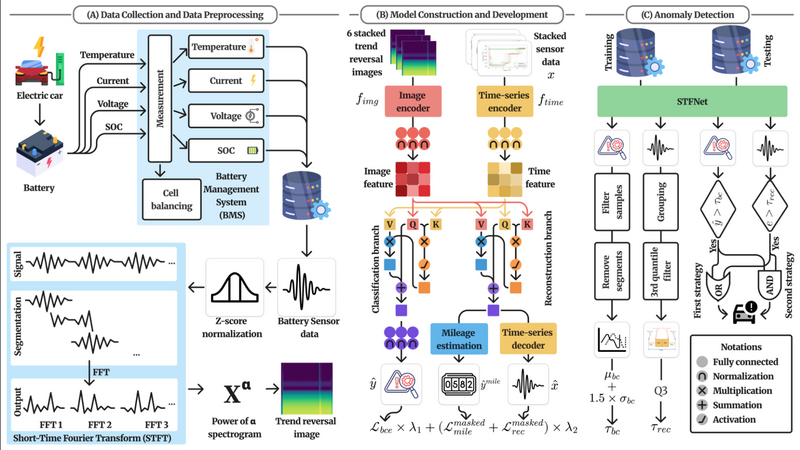
Recommended citation: Phuong-Nam Tran, Trung Thanh Pham, Jae-Jo Lee, Eui-Nam Huh, Choong Seon Hong. (2026). "Enhancing battery anomaly detection via trend-reversal spectrograms and multi-modal cross-attention." eTransportation, 30, 100644.
Download Paper
Federated learning for medical image analysis: Methods, challenges, and future directions
Published in Advanced Engineering Informatics, 2026
Abstract (excerpt). In recent years, rapid technological advances have made artificial intelligence a global trend, significantly advancing the fields of medicine and healthcare. Meanwhile, concerns about information security and medical data privacy have also increased. Although many studies have collected data from hospitals to train centralized models, data sharing between medical facilities is often restricted and protected by law. Federated learning (FL) emerges as a promising solution, enabling model training across different medical facilities without sharing raw data, thereby safeguarding patient privacy and ensuring data security. Our study reviews key works on FL in medical image analysis (MIA) from 2020 to 2025. We systematically analyze major challenges, including data heterogeneity, non-independent and identically distributed data, missing labels, communication costs, and privacy risks during model updates …
Recommended citation: Thu Thuy Le, Phuong-Nam Tran, Nhat Truong Pham, Balachandran Manavalan, Li Shen, Choong Seon Hong, Duc Ngoc Minh Dang. (2026). "Federated learning for medical image analysis: Methods, challenges, and future directions." Advanced Engineering Informatics, 76, 104976.
Download Paper